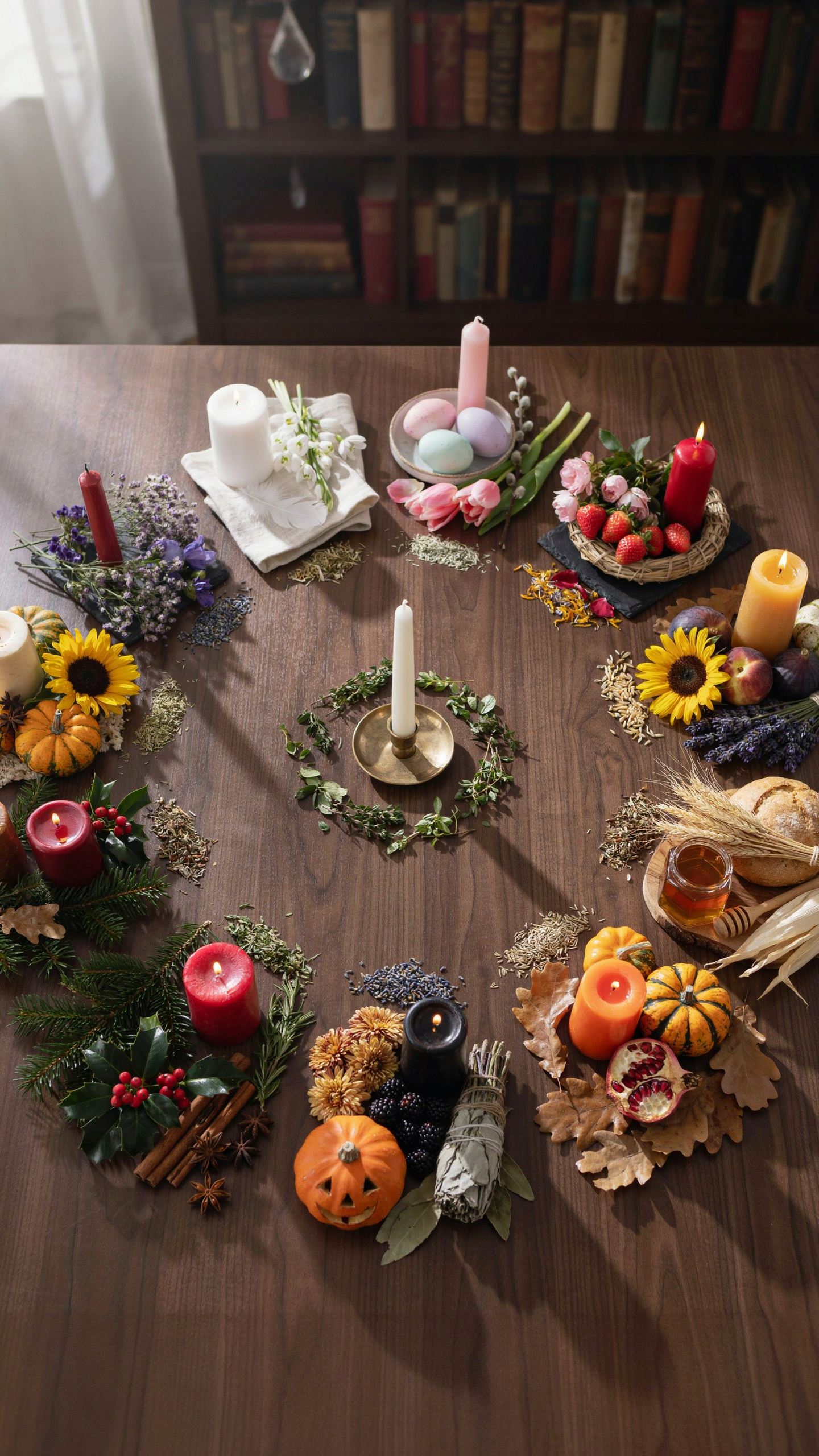
Your altar is one of the most personal expressions of your practice. It shifts with the seasons, reflects where you are in the wheel of the year, and gives you a physical place to anchor your intentions. This post walks through altar ideas for all eight sabbats so you always have somewhere to start, whether you’re building an elaborate seasonal display or simply lighting a single candle with intention.
A Few Notes Before We Begin
Altar building doesn’t have to be expensive or elaborate. A windowsill, a corner of a bookshelf, a small tray on your dresser: any surface you dedicate with intention becomes an altar. The items listed here are suggestions and starting points, not requirements. Work with what you have, what you can find outside, and what resonates with your own practice.
If you’re new to sabbat altars, start simple. One candle in a seasonal color, one natural item from outside, one object that holds personal meaning. That is a complete altar.
Also worth noting: these suggestions draw from a broadly eclectic modern witchcraft framework. Your tradition may have its own emphases and practices. Adapt freely.
Samhain (October 31 / November 1)
Samhain is the witch’s new year, the night when the veil between the living and the dead is at its thinnest. It is a time for ancestral honoring, divination, release, and deep reflection on what has ended and what is being carried forward.
The Energy
Death and remembrance. The thinning veil. Endings, release, and the wisdom of what has passed. The dark half of the year beginning. Ancestors, beloved dead, spirit communication.
Altar Colors
Black, deep orange, burgundy, dark purple, bone white, gold.
What to Place on Your Samhain Altar
For ancestral honoring: Photographs of loved ones who have died, small objects that belonged to them, heirlooms, a handwritten list of their names. A cup of water or a small portion of food left as an offering to the dead is traditional in many cultures.
For the season: Carved or uncarved pumpkins, gourds, autumn leaves in their darkest colors, dried corn husks, seed pods, pomegranates, apples (cut crosswise to reveal the hidden pentagram of seeds inside).
For divination: Your tarot deck, a scrying mirror, a pendulum, a bowl of dark water for black mirror work.
Candles: Black for the thinning veil and spirit communication, deep orange for the harvest season, white for the beloved dead.
Crystals: Obsidian, onyx, black tourmaline, jet, smoky quartz, labradorite, bloodstone.
Herbs and botanicals: Mugwort, wormwood, dried rosemary for remembrance, calendula, apple, oak leaves, dried chrysanthemum.
Optional additions: A cauldron (especially if you’re doing any burning or releasing work), a skull (decorative or animal), dried bones from ethical sources, spider webs and imagery if that resonates.
Altar Intention
Samhain altars often serve as temporary ancestor shrines for the season. Consider leaving them active through November 1st and tending them daily with fresh water, lit candles, and spoken words to those you remember.

Yule (December 20-23, Winter Solstice)
Yule is the longest night of the year and the moment when the light begins to return. It is a celebration of hope, endurance, and the promise that warmth and growth will come again even in the deepest dark.
The Energy
The return of light. Hope in darkness. Rest, introspection, and the quiet magic of the turning point. Evergreen life persisting through winter. The sun’s rebirth.
Altar Colors
Deep green, red, gold, silver, white, midnight blue.
What to Place on Your Yule Altar
For the returning light: Candles are the centerpiece of a Yule altar, ideally many of them. Pillar candles, taper candles, tea lights arranged in a ring. The act of lighting them all at once on the solstice night is a simple and deeply satisfying ritual in itself.
For the season: Evergreen boughs (pine, fir, cedar, holly, ivy), pine cones, dried orange slices, cinnamon sticks, dried cranberries, sprigs of rosemary, a Yule log (even a small decorative one with candle holders set into it).
For the sun: A gold or brass sun disc, citrine, sunstone, solar imagery of any kind. A single gold candle representing the newborn sun.
Candles: Gold for the returning sun, white for the solstice night, red for warmth and life, green for evergreen endurance.
Crystals: Clear quartz (to amplify and reflect light), citrine, garnet, bloodstone, ruby, gold calcite, sunstone.
Herbs and botanicals: Pine, cedar, frankincense, myrrh, cinnamon, clove, orange peel, holly berries, mistletoe (keep out of reach of children and pets, as it is toxic).
Optional additions: Antler imagery or actual antlers, a Yule wreath as a back-drop, small wrapped gifts on the altar as offerings, gold ribbon and bells.
Altar Intention
A Yule altar is an act of faith in the light. Consider writing down one intention you are planting in the darkness, something you want to grow as the light returns, and placing it folded beneath your central candle.
Imbolc (February 1-2)
Imbolc is the first whisper of spring, the festival of Brighid, and a celebration of fire, creativity, healing, and the slow return of light and warmth. The ground is still frozen but something is stirring underneath.
The Energy
First light returning. The spark before the flame. Creativity, inspiration, healing, purification. The forge and the hearth. New beginnings when everything still looks like winter.
Altar Colors
White, cream, pale yellow, soft gold, light blue, pale green.
What to Place on Your Imbolc Altar
For Brighid: A Brighid’s cross woven from rushes or straw is one of the most traditional Imbolc altar pieces. A Brighid doll or brídeog (a small figure made of grain or rushes dressed in white) is another traditional element. A flame in her honor.
For the season: Snowdrops and early spring bulb flowers if you can find them, white candles, a small bowl of fresh water from a spring or rain, seeds you intend to plant, new growth from forcing bulbs indoors.
For fire and the forge: Candles, candles, and more candles. Imbolc is deeply associated with flame. A red candle for the hearth fire, white candles for the returning light.
For creativity: A pen and blank paper, a small sketchbook, any tools associated with your creative work. Imbolc is a beautiful time to dedicate creative projects on your altar.
Candles: White for purification and new beginnings, gold for the returning sun’s warmth, red for Brighid’s sacred flame.
Crystals: Amethyst, clear quartz, rose quartz, garnet, carnelian, citrine.
Herbs and botanicals: Snowdrop, basil, rosemary, angelica, chamomile, bay laurel, lavender, cinnamon.
Optional additions: A small vial of milk or cream as an offering, a piece of handmade craft work, a flame that you commit to tending throughout the day.
Altar Intention
Imbolc is a beautiful time for a creativity dedication. Write down one creative project or practice you want to nurture through the growing season and place it on the altar with a lit candle. Ask for Brighid’s blessing on the work.

Ostara (March 19-22, Spring Equinox)
Ostara is the spring equinox, the moment of perfect balance between light and dark before the light takes over for the season. It is a festival of new beginnings, fertility, rapid growth, and the sheer exuberance of the natural world waking up.
The Energy
Balance tipping toward growth. New beginnings, seeds, fertility, rapid unfurling. The joy of emergence. Dawn energy. Everything beginning at once.
Altar Colors
Pale green, yellow, lavender, pink, light blue, white, soft gold.
What to Place on Your Ostara Altar
For the season: Fresh spring flowers, absolutely. Daffodils, tulips, hyacinths, crocuses, cherry blossom branches if you can find them. Eggs, decorated or plain, as symbols of potential and new life. Seed packets for plants you intend to grow.
For balance: Two candles in equal size, one representing the dark half of the year, one the light. A scales imagery, a yin-yang symbol, anything that speaks to the equilibrium of the equinox.
For growth: Sprouting seeds in small pots, fresh soil, any seedlings you’ve started. These are particularly beautiful on an Ostara altar because they are literally alive and growing.
Symbols of the season: Rabbit imagery (associated with Ostara and spring fertility in many traditions), bird nests with or without eggs, butterfly imagery for transformation, bee imagery for pollination and community.
Candles: Yellow for the sun’s growing strength, green for the earth waking up, lavender for the gentle energy of early spring.
Crystals: Green aventurine, moss agate, clear quartz, rose quartz, aquamarine, amazonite, prehnite.
Herbs and botanicals: Jasmine, violet, rose, daffodil, clover, mint, lemon balm, dandelion, honeysuckle.
Optional additions: A small bowl of seeds to bless on the altar before planting, painted eggs, a dish of honey, a nest or nest imagery.
Altar Intention
Write your intentions for the growing season on a small piece of paper and tuck it into a folded seed envelope or bury it in the pot of a seedling on your altar. As the plant grows, your intention grows with it.
Beltane (May 1)
Beltane is fire and flowers and the full roar of spring becoming summer. It is a festival of fertility, passion, abundance, union, and the peak of the earth’s creative power. Everything is in bloom. The energy is high.
The Energy
Full aliveness. Fire, passion, pleasure, union. Abundance in motion. The world at its most generative. Joy, sensuality, creativity at its peak.
Altar Colors
Red, pink, green, gold, white, bright orange.
What to Place on Your Beltane Altar
For fire: A red or gold candle as the centerpiece representing the Beltane fire. A small cauldron if you have one. Fire imagery, the sun disc, anything warm and radiant.
For flowers: Beltane is one of the most floral sabbats. Fresh flowers in abundance: hawthorn blossom if you can find it (the traditional Beltane flower), roses, peonies, wildflowers gathered from outside, a flower crown laid across the altar.
For the season: Ribbons in sabbat colors for a miniature maypole effect, woven flower garlands, fresh green leaves and branches, strawberries, cream, honey.
For union and fertility: Two candles in complementary colors placed together, intertwined ribbons, a chalice and a wand or blade representing the union of complementary energies.
Candles: Red for passion and the Beltane fire, green for the fertile earth, gold for the sun at its growing peak.
Crystals: Rose quartz, carnelian, garnet, malachite, emerald, rhodonite, ruby.
Herbs and botanicals: Rose, hawthorn, jasmine, ylang ylang, vanilla, hibiscus, mint, nettle, elder flower.
Optional additions: A small mirror to invite abundance and beauty, bee imagery (bees are sacred to Beltane and to the generative season), strawberries as a fresh altar offering.
Altar Intention
Beltane altars call for abundance work. Write down what you want to call into full bloom in your life right now, not someday, right now, and place it in a folded piece of red paper beneath your candle.
Litha (June 19-22, Summer Solstice)
Litha is the longest day, the sun at its absolute peak, and the turning point where the light begins the slow journey back toward dark. It is a festival of the sun’s full power, abundance made manifest, and the bittersweet perfection of a peak that is also a turning.
The Energy
Peak light and power. The sun’s full strength. Abundance manifest. A high point and a turning. Fire magic, solar magic, gratitude for what has grown.
Altar Colors
Gold, bright yellow, orange, deep red, white, green.
What to Place on Your Litha Altar
For the sun: Gold and yellow candles, a sun disc or solar wheel, citrine, sunstone, anything that captures and reflects light. A mirror on your altar at Litha is particularly lovely, catching sunlight or candlelight and scattering it.
For the season: Sunflowers, marigolds, St. John’s wort (both as a herb and as dried flowers), chamomile, fresh lavender, oak branches, honey in a glass jar catching the light, fresh fruit at its peak ripeness.
For fire: A central pillar candle in gold or deep amber, lit throughout the day if possible. Bonfire imagery. Ash from a previous fire if you have any saved.
For the turning: Two candles, one at full height to represent the sun’s peak and one already somewhat shorter, acknowledging the returning dark. This dual acknowledgment is one of the most meaningful gestures you can make on a Litha altar.
Candles: Gold for the sun, orange for fire and warmth, white for the full brightness of the longest day.
Crystals: Citrine, sunstone, carnelian, tiger’s eye, amber, pyrite, yellow calcite, golden topaz.
Herbs and botanicals: St. John’s wort, chamomile, lavender, rosemary, oak, mistletoe (with caution, it is toxic), sunflower, marigold, vervain.
Optional additions: A wheel imagery (the solar wheel is a traditional Litha symbol), a journal for gratitude writing, beeswax candles specifically, a glass of fresh lemonade or sun tea as a living altar offering.
Altar Intention
Litha is an ideal time for gratitude magic. Write a list of everything that has come into full bloom since Imbolc, literal or metaphorical, and place it on your altar. Then write one thing you are consciously releasing as the light turns.
Lammas / Lughnasadh (August 1)
Lammas is the first harvest, the moment when the abundance of the growing season becomes tangible in your hands. It is a festival of gratitude, sacrifice (in the original sense of making sacred), skill, and the bittersweet knowledge that in order to receive the harvest, something must be cut down.
The Energy
First harvest. Gratitude for what has grown. Sacrifice and sacred offering. Craft, skill, and mastery. The sun’s warmth still present but the light beginning to shift. Grain, bread, the body’s sustenance.
Altar Colors
Gold, warm amber, deep yellow, burnt orange, russet brown, cream, forest green.
What to Place on Your Lammas Altar
For the harvest: A small loaf of bread, ideally homemade, placed as a central offering. Sheaves of wheat or dried grasses tied with twine, dried corn, sunflowers, a jar of honey, fresh berries, stone fruits, tomatoes and vegetables at their peak.
For Lugh and the sun: Gold candles, solar imagery, anything representing skill and mastery (a tool from your craft or work, a pen, a musical instrument, anything made by skilled hands).
For the grain: A corn dolly or grain figure woven from dried stalks, a sheaf of wheat, flour in a small dish, oats or other grains in a bowl.
Candles: Gold for the harvest sun, amber for the changing season, deep orange for the fire of transformation.
Crystals: Citrine, tiger’s eye, carnelian, amber, golden calcite, peridot, aventurine, corn jasper.
Herbs and botanicals: Wheat, corn, oat, barley, sunflower, calendula, meadowsweet, bilberry, blackberry, heather.
Optional additions: A harvesting sickle or knife laid on the altar, dried seed heads, a journal prompt about what you are harvesting in your own life this season, a piece of your own handmade work as an offering.
Altar Intention
Lammas asks what you are harvesting from the seeds you planted at Imbolc and Ostara. Write a short reflection on this and leave it folded beneath your bread offering. Then eat a piece of the bread as communion with the harvest.
Mabon (September 21-24, Autumn Equinox)
Mabon is the second harvest and the autumn equinox, another moment of perfect balance before the dark takes over. It is a time of gratitude, completion, rest after labor, and the preparation for turning inward that Samhain will deepen.
The Energy
Second harvest and completion. Balance tipping toward dark. Deep gratitude. Rest and release after the long work of the growing season. The beauty of things ending well.
Altar Colors
Deep orange, burgundy, gold, brown, deep red, purple, forest green.
What to Place on Your Mabon Altar
For the harvest: Apples and apple imagery (apples are deeply connected to Mabon in many traditions), gourds and small pumpkins, grapes and wine, nuts and acorns, dried corn, root vegetables, dried herbs from the summer garden.
For balance: As at Ostara, two candles representing light and dark. A scales image. The equinox balance is different at Mabon: it is the moment of surrender into the dark rather than the triumphant emergence into light.
For gratitude and completion: A written list of the year’s harvests, literal and metaphorical. Anything you made or grew through the season. Symbols of completed projects.
For the turning: Dried leaves in their autumn colors, the last flowers of summer going to seed, acorns and seeds representing the potential of next year already present in the dying of this one.
Candles: Deep orange for the autumn harvest, burgundy for the deepening season, gold for the beauty of what has been.
Crystals: Carnelian, amber, tiger’s eye, smoky quartz, jasper, mahogany obsidian, rutilated quartz.
Herbs and botanicals: Apple, sage, rosemary, marigold, myrrh, dried oak leaves, blackberry, ivy, hazel.
Optional additions: A cornucopia, a libation of apple cider or wine poured for the earth, a small harvest basket, apple slices drying on the altar for a few days before being composted outside.
Altar Intention
Mabon is a completion altar as much as a gratitude one. Write down three things you are genuinely grateful for from this year and three things you are consciously releasing as the wheel turns toward dark. Place both lists on the altar, and at the end of the season, burn the release list.

Keeping Your Sabbat Altar Practice Simple
If tending eight distinct altars through the year feels overwhelming, here is a simpler approach: keep one seasonal altar that you refresh at each sabbat. The bones stay the same, a cloth, a candle or two, a crystal or stone, space for seasonal items. What changes is the dressing: the colors, the plants and flowers, the symbols, the offerings.
Over time you will develop your own seasonal aesthetic and your own set of beloved objects that come out each year. That accumulation of repetition is itself a form of magic. The act of bringing out the same candle holder every Yule, the same skull every Samhain, roots your practice in time in a way that is genuinely grounding.
Your altar is not a performance. It is a conversation with the season, with your practice, and with yourself. Keep it honest, keep it tended, and let it change as you change.
Want a structured guide to working with each sabbat in your grimoire? The sabbat-specific guides in the Beginner’s Grimoire Kit walk you through the energy, correspondences, ritual frameworks, and practices for each turn of the wheel so you have a real foundation to build from.


Leave a Reply