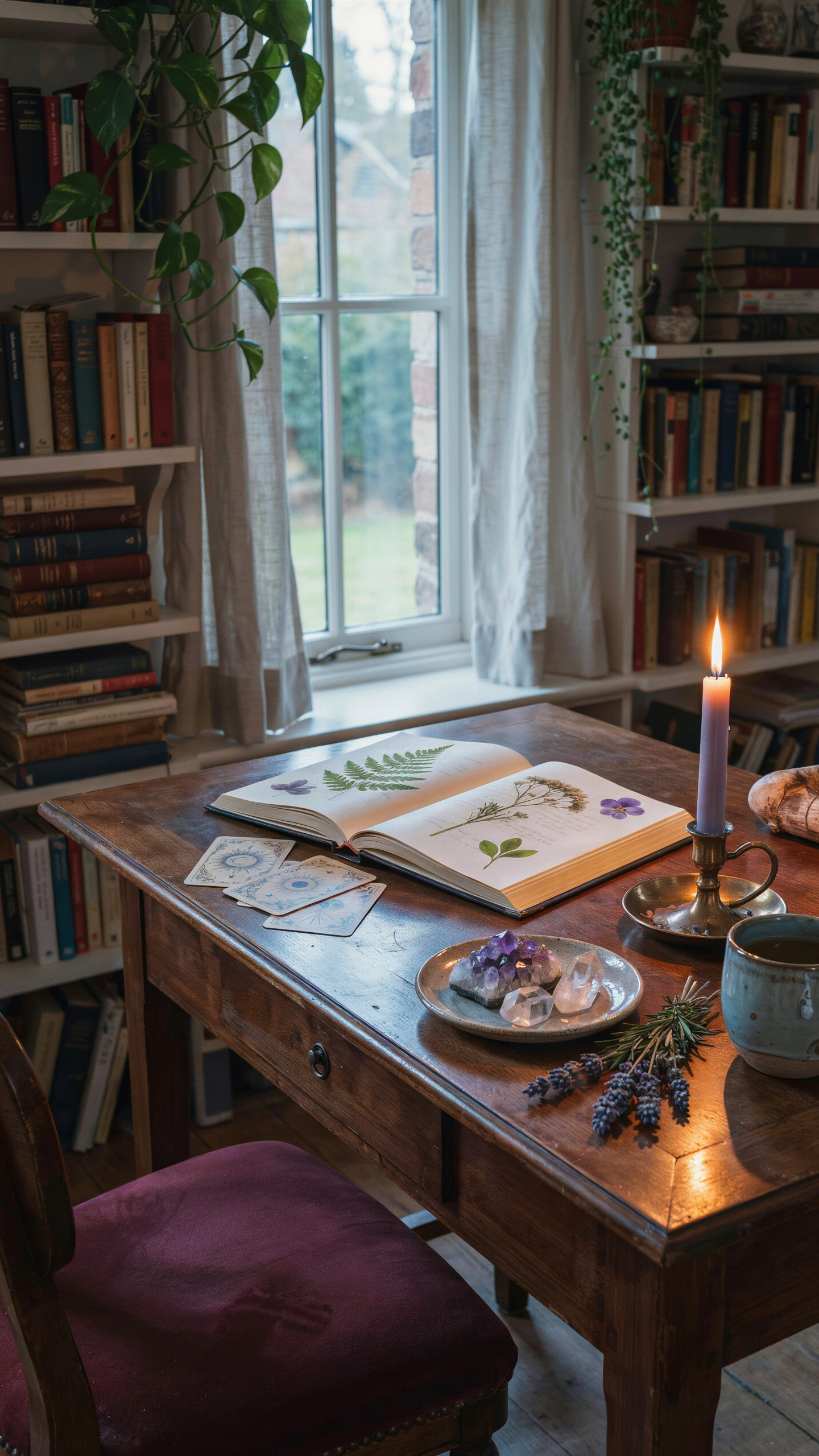
There is a particular kind of witch who reads about green witchcraft and thinks “yes, that part” and then reads about cosmic witchcraft and thinks “also that” and then picks up a book on folk magic and finds three more things that feel true, and eventually stops trying to fit into a single category and starts building something that is genuinely, specifically theirs. If that is you, this post was written for you.
Eclectic witchcraft is the practice of drawing from multiple traditions, systems, and paths to create a personal practice that is self-defined rather than tradition-bound. It is the most common form of modern witchcraft and also one of the most misunderstood. This guide covers what eclectic witchcraft actually is, how to recognize yourself in it, and how to build a practice with real depth and intention rather than a loose collection of things you found on the internet.
What Is an Eclectic Witch?
An eclectic witch is someone who does not follow a single defined tradition but instead draws from multiple sources to create a personal, self-directed practice. Rather than identifying exclusively as a green witch or a cosmic witch or a kitchen witch, the eclectic witch borrows, synthesizes, and combines… taking what resonates from each tradition and leaving what doesn’t.
The word “eclectic” comes from the Greek eklektikos, meaning “selective.” This is the key distinction: eclectic witchcraft is not random. It is selective. A thoughtful eclectic witch does not simply accumulate practices without discernment. They study multiple traditions, understand where different practices come from, choose deliberately, and integrate with care.
Eclectic witchcraft is not a tradition in the formal sense. There is no lineage, no initiatory structure, no single founding text. What it has instead is tremendous freedom and tremendous responsibility. The freedom is real: you can build exactly the practice that fits your life, your beliefs, your landscape, and your needs. The responsibility is equally real: without a tradition to guide you, the work of building a coherent, ethical, and meaningful practice is entirely yours to do.
Most modern solitary witches are, in practice, eclectic, even if they primarily identify with one path. The eclectic label simply names what is already happening.

Signs You Might Be an Eclectic Witch
No single witch type has ever fully captured your practice. You read through descriptions of different paths and find yourself circling multiple. You are drawn to the herbalism of green witchcraft, the timing frameworks of cosmic witchcraft, the home magic of cottage witchcraft, and the spirit work of hedge witchcraft, and you see no reason to choose just one.
Your practice has evolved significantly over time. What you practiced two years ago looks different from what you practice now, and you expect it to keep shifting. You are not attached to any single approach as the final or correct one.
You are naturally drawn to study. Eclectic witches tend to be curious, research-oriented, and comfortable holding multiple frameworks simultaneously. You read widely, across traditions, and enjoy synthesizing what you find.
Your practice reflects your specific life. You have adapted things to your living situation, your schedule, your beliefs, and your sensibilities in ways that a strictly tradition-bound practice might not accommodate. Your altar looks like you. Your rituals feel like you.
You feel friction with the idea of a single path. Not resistance to depth or commitment, you are committed to your practice. But the idea of declaring one tradition as your complete and permanent container feels limiting rather than grounding.
You borrow thoughtfully from multiple cultural traditions. And you think carefully about the difference between appreciation and appropriation, adapting practices through study and respect rather than surface-level aesthetics.
You have been called “not a real witch” by someone who follows a specific tradition. This has no bearing on the validity of your practice, but it does suggest you have encountered the gatekeeping that eclectic witches often face.
Core Practices and Rituals
Personal ritual design. The eclectic witch does not inherit a ritual structure from a tradition. They build their own, drawing from multiple sources and refining through practice. This means developing a personal ritual format: how you open and close a working, how you mark sacred space, what tools and invocations feel right, what structure your seasonal celebrations take. This takes time and experimentation, but the result is a ritual practice that fits like something made for you because it was.
Cross-tradition study. Reading widely is not optional on the eclectic path, it is the practice. Understanding where different traditions come from, what they emphasize, and how they differ from each other allows you to borrow with genuine knowledge rather than surface-level imitation. The more you understand about a tradition, the better equipped you are to integrate its practices ethically and effectively.
Seasonal and lunar practice. Most eclectic witches anchor their year in the Wheel of the Year and the lunar cycle, even when everything else shifts. These two frameworks provide a consistent rhythm that holds the practice together regardless of which other traditions you are drawing from at any given time.
Divination as self-guidance. Without a teacher or tradition to provide external guidance, eclectic witches often develop a strong divination practice, tarot, oracle cards, runes, pendulum, as a primary tool for self-reflection and direction. The cards or tools become a mirror for the kind of inner wisdom that a teacher might otherwise reflect back.
Grimoire keeping. The personal grimoire is particularly central to eclectic practice because it is the place where the synthesis happens. Notes from different traditions, personal correspondences developed through experience, ritual records, spell workings, reflections on what worked and what didn’t, all of this lives in the grimoire and over time becomes something genuinely original: a record of the practice you built.
Ongoing revision. Eclectic witches hold their practices lightly enough to change them. Something that worked beautifully two years ago might no longer fit. A new framework might reframe everything that came before it. The willingness to revise without abandoning the whole is one of the core skills of this path.
Essential Tools and Supplies
The eclectic witch’s toolkit is deeply personal. What follows is a starting framework rather than a definitive list.
- A grimoire or Book of Shadows – the most essential tool on this path, in any format that works for you
- Divination tools: tarot deck, oracle cards, runes, or pendulum- whichever system calls to you
- Candles in a range of colors for intention work across different traditions
- A general herb and crystal collection built over time to reflect your developing correspondences
- Altar space that shifts to reflect your current focus and the season
- Books across multiple traditions – a physical or digital library of reference material
- A dedicated journal separate from the grimoire for processing, questioning, and reflecting on the practice itself
- Ritual tools as needed: athame or wand if they resonate, a cauldron or fireproof dish for burning, a chalice for water work
Eclectic Witch Correspondences
Because eclectic witchcraft is self-defined, correspondences should ultimately be personal. The following are common starting points across many traditions.
Colors: Full spectrum used intentionally; white as a universal stand-in when in doubt; black for banishing and protection; colors matched to intention rather than a single tradition’s system
Crystals: Clear quartz (universal amplifier and the most adaptable crystal for any tradition), amethyst (intuition and spiritual clarity), black tourmaline (protection across all systems), rose quartz (heart work across traditions), obsidian (shadow and truth)
Herbs: Rosemary (protection, memory, versatile across traditions), lavender (calm and purification), mugwort (vision and liminal work), bay leaf (wishes and intentions), cinnamon (amplification and warmth)
Elements: All four elements plus spirit, worked with flexibly across systems
Seasons: All eight sabbats of the Wheel of the Year as a general framework, adapted to personal meaning and local landscape
Moon phases: New, waxing, full, and waning as primary markers; adapted to specific intentions from whichever tradition is most active in the current practice
Divination systems: Whichever you develop genuine fluency with, depth in one system is more valuable than surface familiarity with many

Common Misconceptions
Eclectic witchcraft is just beginner witchcraft before you find your real path. This is probably the most common piece of dismissiveness aimed at eclectic practitioners, and it is simply wrong. Many experienced, deeply rooted witches are eclectic by choice and by design. Eclecticism is not a waiting room. It is a valid long-term practice for people who find genuine depth in synthesis rather than in tradition.
Eclectic means anything goes. Freedom is not the same as formlessness. Eclectic witches who practice with integrity study what they draw from, consider the cultural origins of practices, maintain ethical awareness around appropriation, and build their practice with intention. Taking whatever looks aesthetic without that grounding is not eclecticism, it is carelessness.
You cannot go deep as an eclectic witch. Depth in practice comes from sustained attention, consistent return, and genuine relationship with your tools, your land, and your inner life. None of that requires a single tradition. An eclectic witch who has kept a grimoire for ten years, developed a genuine divination practice, and tended the same altar through a decade of seasons has gone very deep indeed.
Eclectic witches do not respect other traditions. A thoughtful eclectic practitioner often has more knowledge of multiple traditions than someone who has only ever studied one, precisely because studying across traditions requires genuine engagement with each of them. Respect is demonstrated through study and discernment, not through exclusivity.
Related Types of Witches
Green Witch: One of the most common paths eclectic witches draw from, particularly for herbalism, plant magic, and seasonal attunement.
Cottage Witch: The home-based, domestic dimension of cottage witchcraft integrates naturally into most eclectic practices and is often one of the first paths eclectic witches begin weaving in.
Cosmic Witch: Astrological timing and lunar practice are among the most popular frameworks borrowed by eclectic witches, offering a consistent structure that holds other practices together.
Hedge Witch: The spirit work, dreamwork, and liminal practices of hedge witchcraft complement the eclectic path particularly well for witches drawn to the more intuitive and psychic dimensions of practice.
Books and Resources
“Witchcraft Today” by Gerald Gardner is worth reading as a historical document — it is the foundation of modern Wicca and therefore one of the primary sources that much of contemporary witchcraft, including eclectic practice, descends from.
“The Spiral Dance” by Starhawk is a landmark text in feminist, earth-based, and eclectic witchcraft. Dense and rich and deeply worth reading for any practitioner who wants to understand the philosophical roots of modern witchcraft.
“Evolutionary Witchcraft” by T. Thorn Coyle covers Feri tradition but is broadly useful for any serious practitioner interested in developing rigor, ethics, and depth in a self-directed practice.
“Witchery” by Juliet Diaz is warm, accessible, and explicitly oriented toward building a personal, intuitive practice. A good companion for eclectic witches in the early stages of finding their own voice.
“The Witch’s Book of Shadows” by Jason Mankey is one of the most practical guides to building and keeping a grimoire available, which makes it directly useful for eclectic practitioners whose grimoire is the primary record of their self-built practice.
“To Walk a Pagan Path” by Alaric Albertsson covers the practical dimensions of building a daily nature-based practice across traditions. Grounded, non-dogmatic, and immediately applicable.
How to Start Your Eclectic Witch Practice
The eclectic path begins with honest self-inquiry and grows through sustained attention. Here is where to start.
Map what already resonates. Before adding anything new, take stock of what you are already drawn to. Write down the practices, symbols, tools, and ideas that have always felt true to you, even before you had language for them. This is the raw material of your eclectic practice. It already exists.
Study before you borrow. When something from a specific tradition calls to you, spend time genuinely learning about it before incorporating it. Where does this practice come from? What is it designed to do? What is its cultural context? Understanding the source makes your borrowing meaningful rather than decorative.
Start your grimoire now. Even a plain notebook works. Begin recording what you study, what you try, what works and what doesn’t, and what questions you are currently sitting with. Your grimoire is the ongoing record of your practice taking shape. The sooner it begins, the richer it becomes.
Choose one anchor practice. The risk on the eclectic path is wide surface and shallow depth. Counter this by choosing one practice to return to consistently regardless of what else shifts: a daily tarot card, a new moon ritual, a weekly altar tending, a seasonal celebration. This consistent anchor gives the rest of the practice something to orbit.
Give yourself permission to change. Your practice today is not a contract with your future self. Try things. Discard what doesn’t serve you. Follow what genuinely lights up your attention. The eclectic path is alive, and it stays alive by moving.
The Witch School Grimoire Kit is a complete beginner’s foundation in witchcraft across eight done-for-you modules: Elements, Moon Phases, Wheel of the Year, Altars, Spell Basics, Divination, Crystals and Herbs, and Shadow Work. For eclectic witches who want a comprehensive starting point across multiple areas of study, it covers exactly the breadth this path requires. Each module includes a mini guide, reference sheet, worksheets, and a bonus cheat card. Explore the Grimoire Kit here.
There is no single right way to be a witch. There never has been. The traditions that exist today are themselves syntheses of older traditions, adapted and reshaped by the people who practiced them across generations. Every witch who has ever added her own touch to an inherited practice was, in some sense, practicing eclectically. You are part of a long line of people who looked at the available frameworks and said: yes, and also this. That is not a lesser form of practice. It is one of the oldest forms there is. Build something true. Build something yours.


Leave a Reply