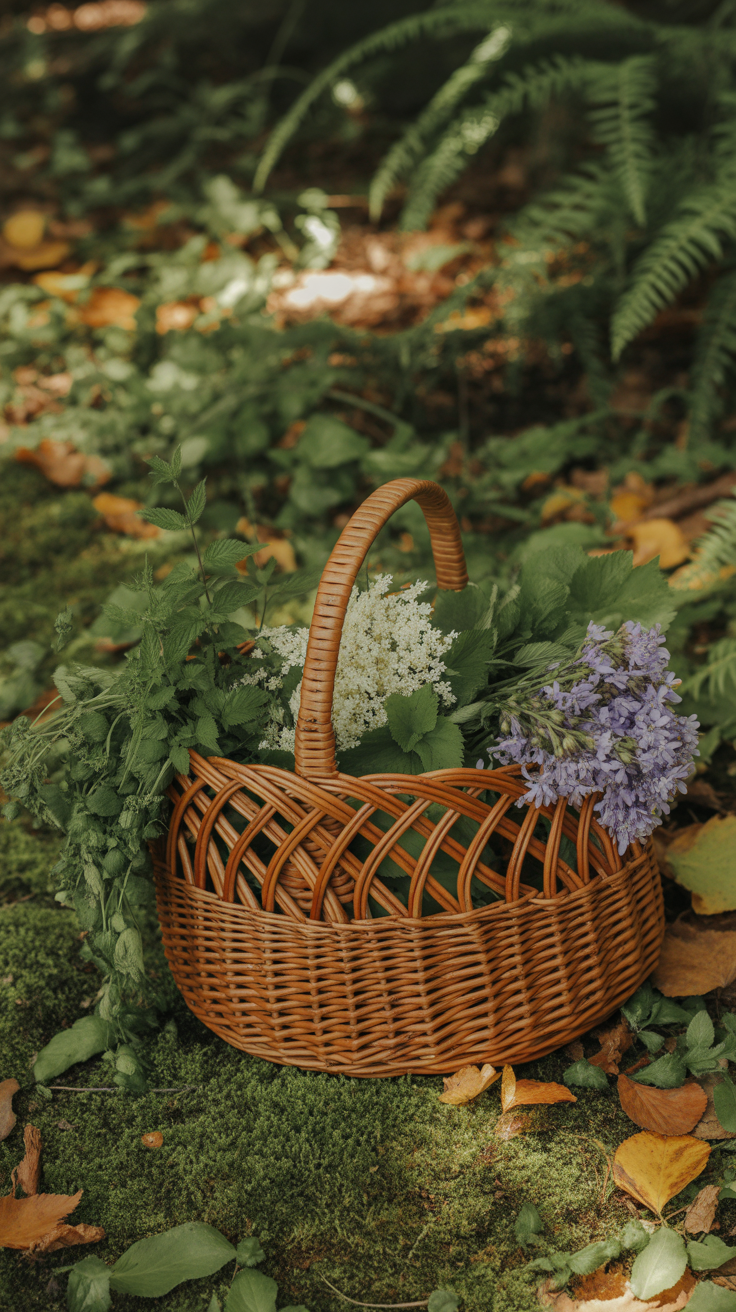
If you’ve ever felt called to grow your own herbs, collect fallen leaves on a walk, or press flowers just because it felt right, you might already be practicing green witchcraft without realizing it.
Green witchcraft is one of the most accessible, intuitive paths in modern witchcraft. It’s rooted in the natural world: plants, herbs, trees, soil, seasons, and the quiet magic that lives in your garden, your windowsill, and the woods behind your neighborhood. No elaborate ritual tools required. No years of study before you’re “allowed” to start.
This guide is your entry point. Whether you’re completely new to witchcraft or you’ve been exploring for a while and feel a pull toward the green path, this is for you.

What Is a Green Witch?
A green witch is someone whose magical practice centers on the natural world, especially the plant kingdom. Green witchcraft draws on herbalism, foraging, seasonal living, and earth-based ritual. It’s both practical and spiritual: you might use rosemary to clear stagnant energy in your home while also using it in your Thursday night pasta. The two aren’t separate.
Green witches tend to be deeply observant of seasonal shifts, moon cycles, and the behavior of the natural world around them. Many grow their own herbs. Many forage, or at least learn to identify local plants. Many maintain a kitchen garden, a windowsill of pots, or even just a single thriving plant they tend with intention.
The green path is not a single tradition. It blends seamlessly with cottage witchcraft, kitchen witchcraft, folk magic, and hedge witchery. You can be a green witch and also follow a specific pagan path, or you can be a secular practitioner who simply loves working with plants. The label is a compass, not a cage.
Core Principles of Green Witchcraft
Green witchcraft doesn’t have a fixed rulebook, but there are a few guiding principles you’ll find woven through almost every green witch’s practice.
Relationship over transaction. Green witches approach plants as living beings worthy of respect, not just ingredients to harvest and use. Before you pick an herb, you acknowledge it. You thank it. You take only what you need.
The land is local. Green witchcraft is inherently place-based. The plants in your region, the trees native to your ecosystem, the seasonal patterns of your specific landscape, these are your primary teachers. A green witch in the Pacific Northwest will have a different practice than a green witch in rural Appalachia or coastal Spain, and that’s exactly as it should be.
Magic is everyday. Green witchcraft isn’t reserved for full moon rituals and sabbat celebrations. It lives in how you tend your plants in the morning, which herbs you reach for when you have a headache, how you cook dinner, and how you notice the first crocus of spring.
Knowledge matters. Green witchcraft has a long relationship with practical herbalism, and while you don’t need to become a clinical herbalist, learning what plants actually do, medicinally and energetically, is part of the path. Know what you’re working with.

The Green Witch’s Core Practice Areas
Herbalism and Plant Magic
This is the backbone of green witchcraft. Herbs are used in spell work, ritual, cooking, home care, and healing. Each plant carries both physical properties and energetic or magical correspondences. Lavender calms anxiety and also invites peace and clarity into a space. Rosemary is antimicrobial and also protective. Mugwort supports vivid dreaming and is associated with psychic development.
You don’t need a massive apothecary to start. A handful of foundational herbs goes a long way.
Beginner herbs to start with:
- Lavender: calm, peace, sleep, cleansing
- Rosemary: protection, memory, purification, abundance
- Chamomile: relaxation, prosperity, gentle healing
- Mugwort: dream work, psychic awareness, moon magic
- Thyme: courage, purification, health
- Basil: abundance, love, protection, cleansing negativity
- Sage (common garden sage): wisdom, protection, longevity
- Mint: prosperity, energy, communication, travel
Grow what you can. Buy what you can’t. Store herbs properly, in glass, away from heat and light, and keep notes on what you use and how it feels to work with each plant.
The Green Witch’s Garden
You don’t need land. You don’t need a yard. A south-facing windowsill with a few pots is a legitimate green witch’s garden.
If you do have outdoor space, think in layers: culinary herbs you use in cooking, magical herbs you grow for ritual and spell work, native plants that support local pollinators, and at least one plant you grow just because it’s beautiful. Intentionality in the garden is its own form of magic.
When you plant with intention, tend with attention, and harvest with gratitude, the garden becomes a living altar.
Foraging and Plant Identification
Foraging is a practice, not a hobby. Learning to identify wild plants in your area takes time, patience, a good field guide, and ideally some time spent with a more experienced forager before you consume anything.
Start with observation only. Spend a season just learning to recognize what grows near you without picking anything. Use an app like iNaturalist or PictureThis to help with identification, but always cross-reference with a regional field guide and when in doubt, don’t consume it.
Common beginner forage-friendly plants in many North American regions: dandelion, wood sorrel, clover, chickweed, and plantain (the weed, not the banana). All edible. All medicinal in folk tradition. All incredibly common.
Seasonal and Lunar Awareness
Green witches live by two overlapping rhythms: the wheel of the year and the lunar cycle.
The wheel of the year marks the eight sabbats, the solstices, equinoxes, and the cross-quarter days in between. Each sabbat brings different plants, energies, and magical themes into season. Beltane, for example, is associated with hawthorn, roses, and the blossoming of desire and fertility. Samhain belongs to mugwort, apples, and root vegetables. Following the wheel means your practice shifts naturally with the seasons.
The lunar cycle governs timing in green witchcraft. Plant and begin new projects at the new moon. Harvest, work abundance spells, and move toward fullness at the waxing moon. Work at the height of your intentions at the full moon. Release, let go, and complete at the waning moon. Rest and restore at the dark moon.
Earth-Based Ritual and Altar Work
A green witch’s altar reflects the natural world. Seasonal plants and flowers, stones collected on walks, feathers found ethically, candles, and small figures or symbols meaningful to your practice.
Your altar doesn’t need to be a dedicated table. It can be a shelf, a windowsill, a tray on your dresser. The point is intentional arrangement, a small physical space that says: this is where I connect with something larger than my daily routine.
Rituals in green witchcraft tend to be simple. A candle lit with intention. An herb bundle burned for cleansing. A plant watered while speaking a prayer or affirmation into the soil. A walk in the woods counted as sacred time. Complexity is not required.
How to Start Your Green Witch Practice
If you’re brand new, here’s a grounded, low-pressure way to begin.
Month 1: Observe. Spend the first month just noticing. What plants grow near you? What season are you moving into? What’s blooming or dying back? Start a nature journal, even if it’s just a few sentences and a pressed leaf per week.
Month 2: Learn one herb. Pick one herb and learn everything about it. Its growing habits, its folk history, its medicinal uses, its magical correspondences. Grow it if you can. Cook with it. Make a simple tea. Get to know it as a living relationship.
Month 3: Build a simple altar. Gather a few natural objects that feel meaningful and arrange them with intention. Tend it. Refresh it with the season. Notice how it feels to have a dedicated space in your home.
From there: Layer in. Add herbs slowly. Explore the sabbats. Follow the moon. Read everything you can get your hands on. Connect with other practitioners. Let your practice grow the way a garden does, gradually, seasonally, and exactly at its own pace.

Books for the Green Witch’s Shelf
A few foundational texts worth reading:
“The Green Witch” by Arin Murphy-Hiscock – One of the most widely recommended introductions to the path. Practical, warm, and grounded.
“Cunningham’s Encyclopedia of Magical Herbs” by Scott Cunningham – The reference book for magical herb correspondences. Dense and incredibly useful.
A regional field guide to wildflowers and edible plants specific to your area. This one matters more than any of the above.
A Note on Cultural Respect
Some practices associated with green witchcraft, particularly smudging with white sage, have deep roots in Indigenous traditions and are not meant for appropriation. White sage (Salvia apiana) is also currently overharvested in the wild.
There are many other plants with cleansing properties you can use instead: garden sage, rosemary, lavender, mugwort, or pine. You can burn them loose, bundle them, or simply light incense. The intention behind the act matters far more than the specific plant.
Research before you adopt practices from cultures that are not your own. This is both respectful and, honestly, an opportunity to go deeper into your own ancestral and local traditions.
You’re Already Closer Than You Think
If you made it here, something in this resonated with you. Maybe the herbs. Maybe the seasonal rhythm. Maybe the idea that magic can live in a Tuesday morning cup of tea made with plants you grew yourself.
Green witchcraft is a path of relationship, with the earth, with the plants, with the turning of the seasons, and with your own intuition. It doesn’t require perfection. It requires presence.
Start where you are. Use what you have. Learn what calls to you.
The green path will meet you there.
Curious about building a full magical practice from the ground up? Explore the Beginner Witch Grimoire Kit to begin mapping your own path.


Leave a Reply